Office clearance in Pimlico for organised, compliant workplace emptying

Office clearance in Pimlico should do more than move furniture out of the way. It needs a careful approach to desks, filing, IT equipment, storage, fixtures and mixed workplace items so the space can be handed over, refurbished or re-used without avoidable disruption. We provide a practical clearance service for offices of different sizes, with the aim of removing surplus items in a tidy, sensible sequence and dealing with reusable and non-reusable materials through the right channels.
That can include a straightforward single-room clearance, the emptying of a full office floor, or the removal of selected items that no longer fit the layout. Where businesses need the area left ready for maintenance or outgoing inspection, our work is planned to reduce clutter and keep the process clear. Office clearance is the core service, while related pages explain other waste and item removal options when the job involves broader contents or mixed materials.
When you are ready to discuss the space, request a quotation with a few details about the items, access and timing. If the clearance is part of a wider move, renovation or closure, it helps to mention what must stay in place as well as what should go.
What our office clearance service covers
Office clearance is rarely just a matter of lifting a few chairs. A proper service may involve workstations, filing cabinets, desks, meeting room furniture, reception items, shelves, storage boxes, soft furnishings and general accumulated waste. We also handle mixed items that often appear in workplace clear-outs, such as broken office furniture, redundant fixtures and ancillary materials that need sorting before they leave the premises.
Where a workplace is being reconfigured rather than fully emptied, the service can be scaled to target specific zones. That may suit a leased office, a shared workspace or a business making room for new layouts without closing the entire floor. If you need to understand options for furniture alone, the furniture clearance page gives a useful route into that side of the work, while furniture disposal is relevant when items are no longer suitable for reuse.
In practical terms, a good office clearance respects the way businesses store information, equipment and stock. Larger items are removed in a controlled sequence, and smaller contents are gathered so that nothing is overlooked behind cupboards or under desks. Where office waste includes mixed materials, it is helpful to separate what can be considered for recovery from what must be disposed of more directly, rather than treating every item as the same kind of load.
Planning a clear and efficient clearance

Most office clearances benefit from a simple plan before the work starts. A short inventory of the main items, a note of access restrictions and an idea of the deadline can make the quotation process more precise. Photographs are often useful, especially when rooms contain stacked furniture or mixed contents, because they help show volume, floor space and the likely route out of the building. This is also the right stage to flag any items that should not be touched.
If the office is in regular use, it may be better to clear in stages rather than all at once. That can keep trading areas, meeting rooms or essential storage available while redundant items are taken away. For businesses wanting a broader internal tidy-up, the business waste removal page may be relevant where the job includes ongoing waste handling as well as one-off clearance. Use the outline of the project to decide what needs to go first and what can wait.
Two short points help most clients prepare a useful enquiry: first, identify any access issues such as stair-only buildings, loading limits or limited parking; second, note whether the clearance includes lifting from multiple rooms or just one area. Clarity at the start usually means the work can be scoped more accurately, and it reduces the chance of surprises once the team arrives to begin the removal.
Desk areas, storage and meeting rooms
Office spaces contain different types of items, and each zone can need its own approach. Desk areas often have a mixture of tables, chairs, under-desk storage, monitor stands and loose contents. Filing and storage rooms may include cabinets, archive boxes, shelving and redundant office accessories. Meeting rooms can be simpler, but they may still hold presentation furniture, screens, table units and items that have been replaced during a refurbishment.
We aim to remove these contents without turning the job into a general upheaval. That means working from the most practical route, taking care around walls, doors and shared corridors, and recognising that some pieces are awkward or heavy. Where office furniture is the main concern, the office clearance service remains the best starting point, while the furniture clearance page is useful if you want to separate larger item removal from other categories of waste.
In many offices, the most efficient approach is to group the work by room or by category. That allows clearly reusable furniture, redundant fittings and general disposal items to be handled in a tidy sequence. It also helps the client confirm what should be retained, because a neat room-by-room plan is often easier to check than a vague instruction to empty everything at once.
Clearance for closures, relocations and refurbishment

Office clearance in Pimlico may be needed for several different reasons. Some businesses are moving to another site and must leave the old premises clear. Others are refurbishing, subletting, downsizing or changing how their space is used. The work itself changes slightly depending on the reason, because the order of removal and the treatment of remaining fixtures may need to fit the wider project rather than the clearance alone.
Where a full emptying is required, the work can include the removal of most contents from the main working areas, plus storage and ancillary rooms if those are part of the agreement. If you are comparing services for a larger clean-out, the home clearance and house clearance pages are not office services, but they show how contents removal is handled in domestic settings, which can be useful if a mixed-use building contains both workplace and residential-style items. For commercial premises, the emphasis remains on organised workplace clearance.
For refurbishment jobs, timing matters as much as the item list. Items may need to be removed before decorators, contractors or surveyors begin, and the sequence should leave the usable parts of the building accessible. A well-planned clearance reduces the chance of items being shifted twice, which is especially useful where entrances, lifts or shared areas are involved.
Re-usable items, disposal and responsible sorting
Not every item from an office clearance belongs in the same stream. Some pieces may still be serviceable, while others will be unsuitable for reuse because of age, wear or damage. Sorting items at the point of clearance helps distinguish furniture that may be passed on from materials that need disposal. This is especially important in workplaces where several generations of equipment and fittings have built up over time.
For clients who want to understand the handling of discarded materials more broadly, waste removal gives a wider overview of general non-domestic waste handling, while recycling and sustainability covers the principles behind sensible recovery and reduction. Those pages sit alongside office work, but the office service remains focused on practical removal from the premises and the orderly management of what comes out.
The most useful clearance decisions are made before the team begins moving items. A client can usually save time by marking anything that must stay, identifying anything that must be separated, and grouping obvious discard items together where possible. Even so, the final sorting still needs to be done carefully on site, because offices often contain mixed contents that are not immediately obvious until cupboards, drawers and storage units are opened.
Access, timing and what affects the quotation
Several practical factors can influence the quotation for an office clearance. The amount of furniture and waste is important, but so is the location of the items within the building, the ease of access, the number of floors involved and whether bulky pieces need to be dismantled before removal. Any restricted parking, narrow corridors or awkward stairways can also affect the work required. These are ordinary job-planning details rather than complications, but they matter.
It is usually helpful to share a sensible description of the office layout, the approximate volume of contents and the preferred timing. If the clearance must happen outside normal working hours, or in stages around other contractors, that should be mentioned early. Pricing and quotes is the best page to visit if you want to think through how estimates are formed, while the contact us route is the natural way to ask for a tailored quotation when the scope is clear.
Two pieces of information are especially useful: whether the job is a partial clearance or a complete emptying, and whether the premises contain only office contents or a mixture of office and storage items. That distinction matters because a mixed clear-out often takes a different amount of sorting and handling than a simple furniture lift-out.
About Pimlico
Pimlico is a district in central London within the City of Westminster, laid out mainly in the nineteenth century as part of the large redevelopment of former marshland near the Thames. Its streets are known for a deliberate grid pattern, white stucco terraces and garden squares that give the area a consistent Regency and Victorian character. Much of the neighbourhood was developed by Thomas Cubitt, whose planned streets helped shape the distinctive architectural unity for which Pimlico is widely recognised today. The area sits close to the river, with the Thames Path offering views across the water toward Vauxhall and beyond, while Pimlico station and nearby transport links connect it to the rest of the city.
Furniture, fixtures and mixed contents

Some office clearances are straightforward, but others involve a mix of freestanding furniture and fixed or semi-fixed items. A business may want desks and chairs removed while keeping shelving, or it may need filing and reception items taken out while larger fitted elements remain. The job becomes easier when the clearance is planned around these distinctions, because it avoids unnecessary movement and helps protect anything that is staying in place.
For items that are no longer suitable for the office, the work may overlap with furniture disposal, especially where older chairs, tables or cabinets have reached the end of their use. Where mixed contents are present, it can also be sensible to review garage clearance or loft clearance pages only as examples of broader contents work if the building includes unusual storage rooms with accumulated items, although the main service here remains office-focused and commercial.
Clients often find it helpful to think about the result they want rather than the individual items alone. Some want the room left bare for handover. Others need only the surplus items taken away so the office can continue operating. Both outcomes are manageable, but they are not identical, and the clearer the instruction, the better the plan for removal, sorting and any final sweep of remaining contents.
Commercial waste from workplaces
Offices can produce more than furniture. Paper archives, packaging, broken peripherals, unwanted fittings and general waste can all build up alongside everyday work items. When the clearance includes that broader material, it is worth considering whether the same job should also incorporate office waste collection or separate business waste handling. That can simplify the project where several categories are being cleared from the same building.
Our service is designed to make the process orderly rather than rushed. The team can work through the rooms in sequence, collect the agreed items and leave the remaining business space easier to manage. For businesses with regular waste needs, business waste removal remains a relevant related page, and for general trade and building-related debris the builders waste clearance page may be useful if the office is being refurbished at the same time.
Office waste should be assessed with the surrounding operation in mind. A careful clearance avoids removing useful files, working equipment or items needed for the next phase of the project. It also helps the business keep control of what is being taken away, which is especially important in shared premises or multi-tenant buildings where rooms may have overlapping storage arrangements.
Preparing the workspace before removal
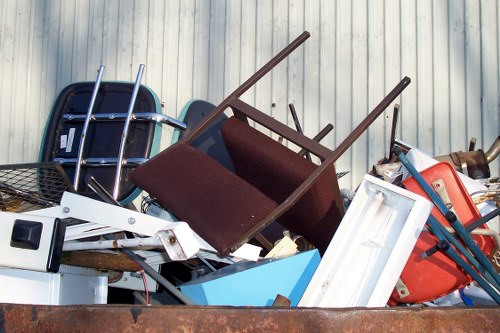
Before an office clearance begins, a little preparation can make the whole process smoother. Staff can usually make the biggest difference by separating items that must remain on site from those that are ready to go, especially in shared offices where several teams may have used the same room. If drawers, cupboards or cabinets contain personal or confidential items, those should be removed first so the clearance team can work only with the agreed contents.
It is also sensible to keep access points clear and to identify anything unusually heavy, fragile or awkward. That includes items that may need two people to move, or equipment that must be handled with care when passing through communal areas. If the office has a strict timetable, let us know early so the work can be arranged around it. For a quotation, a plain description of the rooms, the items and the deadline is often enough to start the process.
Once the main details are clear, the remaining step is simply to choose the right scale of service. A partial clearance, a full emptying or a furniture-only job each needs a slightly different plan. The easiest way to begin is to send your enquiry with the basic scope, and we can then shape the clearance around the office and its contents rather than forcing the job into a fixed pattern.
Supporting offices at handover or reset
Office clearances often happen at a turning point: a lease ending, a move to new premises, a room being repurposed or a floor being reset after a long period of use. In those situations, the value of the service lies in making the transition practical. A tidier handover is easier to manage, and a cleared room is easier to inspect, measure or refurbish without the distraction of unwanted contents left behind.
Where the project is more than a simple lift-out, it can help to think in terms of zones. Reception areas, staff rooms, storage cupboards and meeting rooms may each contain different kinds of items, and not all of them should be treated the same way. The broader the variety of contents, the more useful it is to separate the clearance into agreed parts rather than rely on a single rough description of the whole office.
For businesses that want to understand how costs and scope are set, the most useful next step is to gather a short item list and decide which areas are included. Ask for a quotation when you are ready, and include any access notes so the service can be matched to the space without guesswork.
Choosing the right clearance approach
There is no single template for office clearance because the contents, layout and timescale vary so much from one workplace to another. Some jobs are best handled as a quick removal of surplus desks and chairs. Others need a fuller approach that includes cabinets, archives, mixed waste and awkward items from several rooms. The right choice depends on what the office contains and how much of it needs to remain operational during the clearance.
We keep the service focused on the agreed scope, with attention to the items being removed and the route they take out of the premises. That approach suits landlords, tenants, managing agents and businesses preparing for change. If you want to explore adjacent options, the about us page gives general background on the business, while the office clearance page remains the direct place to start when the main goal is to empty or reset a workplace.
To finish, the most useful action is simple: ask for your quotation once you know what needs clearing. A clear description now makes it much easier to arrange the right level of work later, and it helps ensure the office is left ready for whatever comes next.